
1977 BMW 7 Series
All BMW 7 Series E23 models (with the exception of the 745i) were built with the 12-valve type-M30 six-cylinder engine as used in the older E3 and E9 cars.
Text: press release via NetCarShow
Photo: NetCarShow
 Autoknowtive
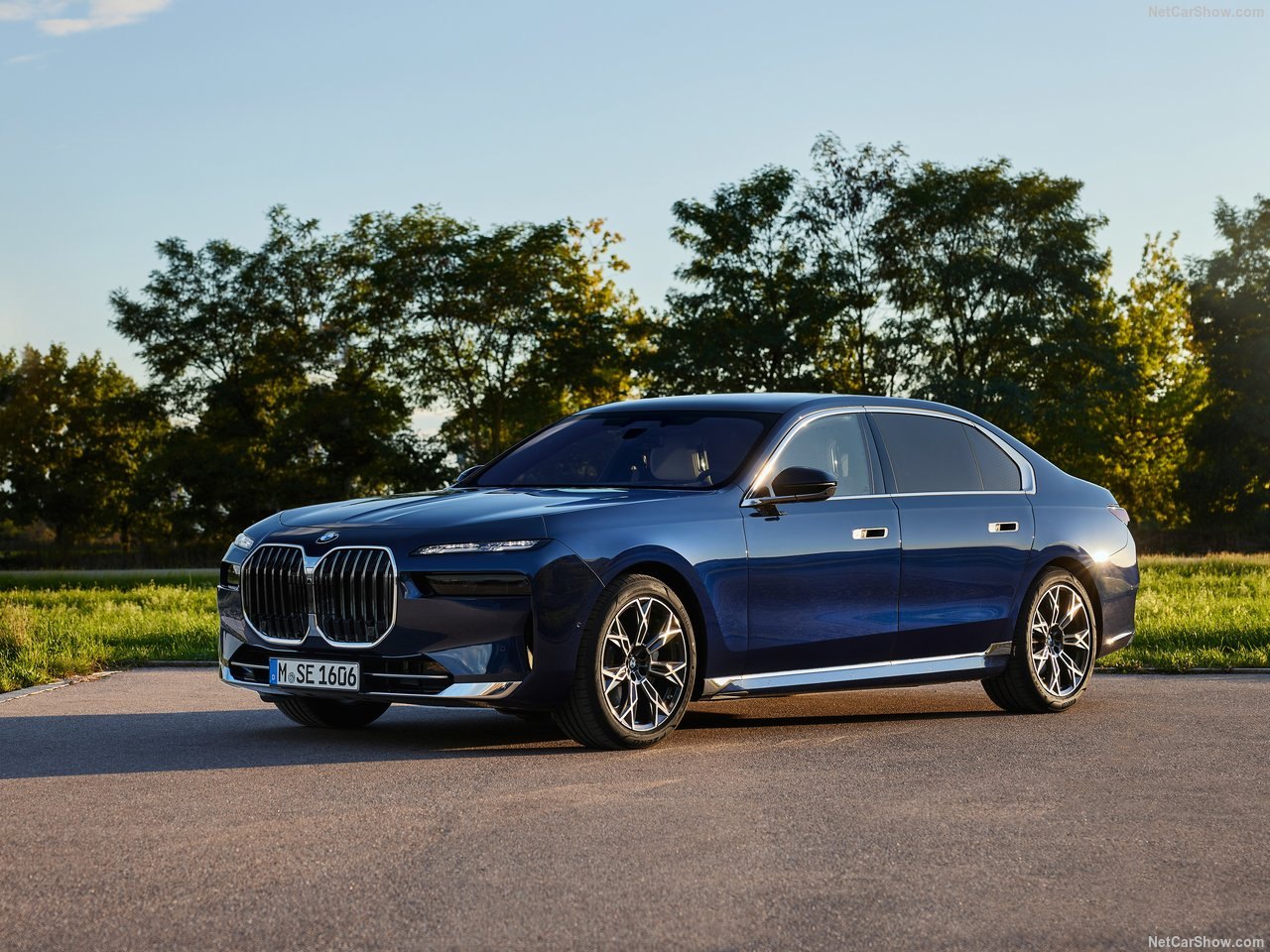
BMW has built the 7 Series since 1977. Autoknowtive’s catalog has 17 of them, from the 1977 BMW 7 Series to the 2023 BMW 7-Series. Sold new in North America, Europe and Asia.
Power went from 252 hp in the 1977 7 Series to 286 hp in the 2023 7-Series. It got heavier along the way: 1,600 kg for the 1977 car, 2,180 kg for the 2023. The most powerful here is the 2009 BMW 7-Series at 449 hp (335 kW), more than 84% of the cars in the catalog. Quickest from 0 to 62 mph: the 2009 BMW 7-Series, in 4.9 s.
All BMW 7 Series E23 models (with the exception of the 745i) were built with the 12-valve type-M30 six-cylinder engine as used in the older E3 and E9 cars.
Text: press release via NetCarShow
Photo: NetCarShow

The BMW E23 is an automobile platform that was the basis for the first BMW 7 Series automobile. Replacing the BMW E3 large sedan, the E23 was produced for ten years from 1977 to 1987 and was replaced by the BMW E32 7-Series in 1988.
Text: press release via NetCarShow
Photo: NetCarShow

In 1986, BMW introduced the second generation of the 7 series, known internally as the E32. Aimed at the high end of the luxury market, the car offered some of the latest innovations in automotive technology, and a new, top-of-the-line V12 engine.
Text: press release via NetCarShow
Photo: NetCarShow

The V12 engine powering the E38 BMW 7-Series was developed on the basis of the M70 - the M73 had a displacement of 5.4 litres and produced maximum output of 326 hp.
Text: press release via NetCarShow
Photo: NetCarShow

The BMW 3 Series (E46) is the fourth generation of the BMW 3 Series range of compact executive cars manufactured by German automaker BMW. Produced from 1997 to 2006, it was the successor to the E36 3 Series, which ceased production in 2000. It was introduced in November 1997, and available in sedan, coupé, convertible, station wagon and hatchback body styles. The latter has been marketed as the 3 Series Compact.
Text: Wikipedia, CC BY-SA 4.0
Photo: Wikimedia Commons

The BMW E38 model was the basis for the 1995 through 2001 BMW 7 Series automobiles.
Text: press release via NetCarShow
Photo: NetCarShow

Development for the BMW E65 7 Series began in early 1996, and production specifications were frozen in January 1999.
Text: press release via NetCarShow
Photo: NetCarShow

Photo: NetCarShow

The BMW High Security 7 Series was the high security version of the BMW E65 7 Series.
Text: press release via NetCarShow
Photo: NetCarShow

Long-Wheelbase models only featured a longer body which meant extra legroom in the rear seats.
Text: press release via NetCarShow
Photo: NetCarShow

The launch of the fifth generation of the BMW 7-Series sets a new benchmark in automotive luxury, technical innovation and class-leading driving dynamics, combined with emissions reducing and fuel saving technology.
Text: press release via NetCarShow
Photo: NetCarShow

The new BMW 7-Series is set to reinforce its position as the most innovative sedan in the luxury segment. The flagship model series of the BMW fleet embodies sporting elegance, refined powertrain technology and luxurious comfort in equal measure.
Text: press release via NetCarShow
Photo: NetCarShow

With the new 2016 BMW 7-Series, BMW has redefined what an exclusive, luxurious driving experience looks like in contemporary, pioneering form.
Text: press release via NetCarShow
Photo: NetCarShow

The V8 powerplant is teamed up with the latest version of the intelligent all-wheel-drive system in the BMW 750Li xDrive.
Text: press release via NetCarShow
Photo: NetCarShow

Photo: NetCarShow

The rear of the new BMW 7-Series also includes fresh injections of modernity, elegance and presence.
Text: press release via NetCarShow
Photo: NetCarShow

Photo: NetCarShow
| Car | Power | Torque | 0–62 mph | Top speed | Weight | Engine | Drive | Gearbox | EPA combined |
|---|---|---|---|---|---|---|---|---|---|
| 1977 7 Series | 252 hp (188 kW) | 280 lb-ft (380 Nm) | 7.5 s | 137 mph (220 km/h) | 1,600 kg (3,527 lb) | 3.4 L inline-6 | Rear Wheel Drive | 5-speed manual | — |
| 1980 745i | 252 hp (188 kW) | 280 lb-ft (380 Nm) | 7.5 s | 137 mph (220 km/h) | 1,600 kg (3,527 lb) | 3.4 L inline-6 | Rear Wheel Drive | 5-speed manual | — |
| 1987 750iL | 300 hp (224 kW) | 332 lb-ft (450 Nm) | 7.4 s | 155 mph (249 km/h) | 1,860 kg (4,101 lb) | 5.0 L V12 | Rear Wheel Drive | 4-speed automatic | 15 mpg |
| 1999 750iL | 238 hp (177 kW) | 413 lb-ft (560 Nm) | 8.4 s | 150 mph (241 km/h) | 1,935 kg (4,266 lb) | 3.9 L V8 | Rear Wheel Drive | 5-speed automatic | 14 mpg |
| 2000 7 Series Protection | 238 hp (177 kW) | 413 lb-ft (560 Nm) | 8.4 s | 150 mph (241 km/h) | 1,935 kg (4,266 lb) | 3.9 L V8 | Rear Wheel Drive | 5-speed automatic | 18 mpg |
| 2000 740i | 238 hp (177 kW) | 413 lb-ft (560 Nm) | 8.4 s | 150 mph (241 km/h) | 1,935 kg (4,266 lb) | 3.9 L V8 | Rear Wheel Drive | 5-speed automatic | 18 mpg |
| 2002 7 Series | 258 hp (192 kW) | 443 lb-ft (601 Nm) | 7.4 s | 155 mph (249 km/h) | 2,015 kg (4,442 lb) | 3.9 L V8 | Rear Wheel Drive | 6-speed automatic (Steptronic) | 19 mpg |
| 2002 760Li Yachtline | 258 hp (192 kW) | 443 lb-ft (601 Nm) | 7.4 s | 155 mph (249 km/h) | 2,015 kg (4,442 lb) | 3.9 L V8 | Rear Wheel Drive | 6-speed automatic (Steptronic) | — |
| 2006 7 Series High Security | 299 hp (223 kW) | 516 lb-ft (700 Nm) | 6.8 s | 155 mph (249 km/h) | 2,040 kg (4,497 lb) | 4.4 L V8 | Rear Wheel Drive | 6-speed automatic (Steptronic) | 18 mpg |
| 2006 750Li | 299 hp (223 kW) | 516 lb-ft (700 Nm) | 6.8 s | 155 mph (249 km/h) | 2,040 kg (4,497 lb) | 4.4 L V8 | Rear Wheel Drive | 6-speed automatic (Steptronic) | 18 mpg |
| 2009 7-Series | 449 hp (335 kW) | 479 lb-ft (649 Nm) | 4.9 s | 155 mph (249 km/h) | 2,070 kg (4,564 lb) | 4.4 L V8 | Rear Wheel Drive | 8-speed automatic (Steptronic) | 17 mpg |
| 2013 7-Series | 320 hp (239 kW) | 332 lb-ft (450 Nm) | 5.7 s | 155 mph (249 km/h) | 1,995 kg (4,398 lb) | 3.0 L inline-6 | Rear Wheel Drive | 8-speed automatic (Steptronic) | 25 mpg |
| 2016 7-Series | 258 hp (192 kW) | 295 lb-ft (400 Nm) | 5.5 s | 149 mph (240 km/h) | 2,070 kg (4,564 lb) | 2.0 L inline-4 | All Wheel Drive | 8-speed automatic (Steptronic) | 24 mpg |
| 2016 750Li xDrive | 258 hp (192 kW) | 295 lb-ft (400 Nm) | 5.5 s | 149 mph (240 km/h) | 2,070 kg (4,564 lb) | 2.0 L inline-4 | All Wheel Drive | 8-speed automatic (Steptronic) | 24 mpg |
| 2017 M760Li xDrive | 258 hp (192 kW) | 295 lb-ft (400 Nm) | 5.5 s | 149 mph (240 km/h) | 2,070 kg (4,564 lb) | 2.0 L inline-4 | All Wheel Drive | 8-speed automatic (Steptronic) | 27 mpg |
| 2020 7-Series | 340 hp (254 kW) | 516 lb-ft (700 Nm) | 5.0 s | 155 mph (249 km/h) | 1,915 kg (4,222 lb) | 3.0 L inline-6 | Rear Wheel Drive | 8-Speed automatic Steptronic | 24 mpg |
| 2023 7-Series | 286 hp (213 kW) | 479 lb-ft (649 Nm) | 5.8 s | 155 mph (249 km/h) | 2,180 kg (4,806 lb) | 3.0 L inline-6 | All Wheel Drive | 8-speed automatic Steptronic | 27 mpg |
Power is the figure quoted for that version. Fuel economy is the best EPA combined rating, US models only.
Every car on this page can turn up in the game. Spot It starts with a blurry close-up, Model Year asks you to date the photo, and the Daily gives you six guesses at one car. More BMW models are on the BMW page.